عمر بن الخطاب
Umar ibn al-Khattab
Al-Faruq · Second Caliph
Quick Facts
Birth
c. 584 CE, Makkah
Tribe
Quraysh — Banu Adi
Relationship
Father of Hafsah, wife of the Prophet ﷺ
Major Role
Second Caliph; the distinguisher of truth
Death
644 CE (23 AH), Madinah
Once among Islam's fiercest opponents, Umar's conversion strengthened the believers overnight. As al-Faruq he became a byword for justice, and as second Caliph he built the institutions of an expanding state without ever softening toward himself.
Biography Timeline
Before Islam
A strong, literate man of Banu Adi, respected as an envoy of Quraysh, Umar at first opposed the Message with great intensity, fearing it would divide his people.
His Conversion
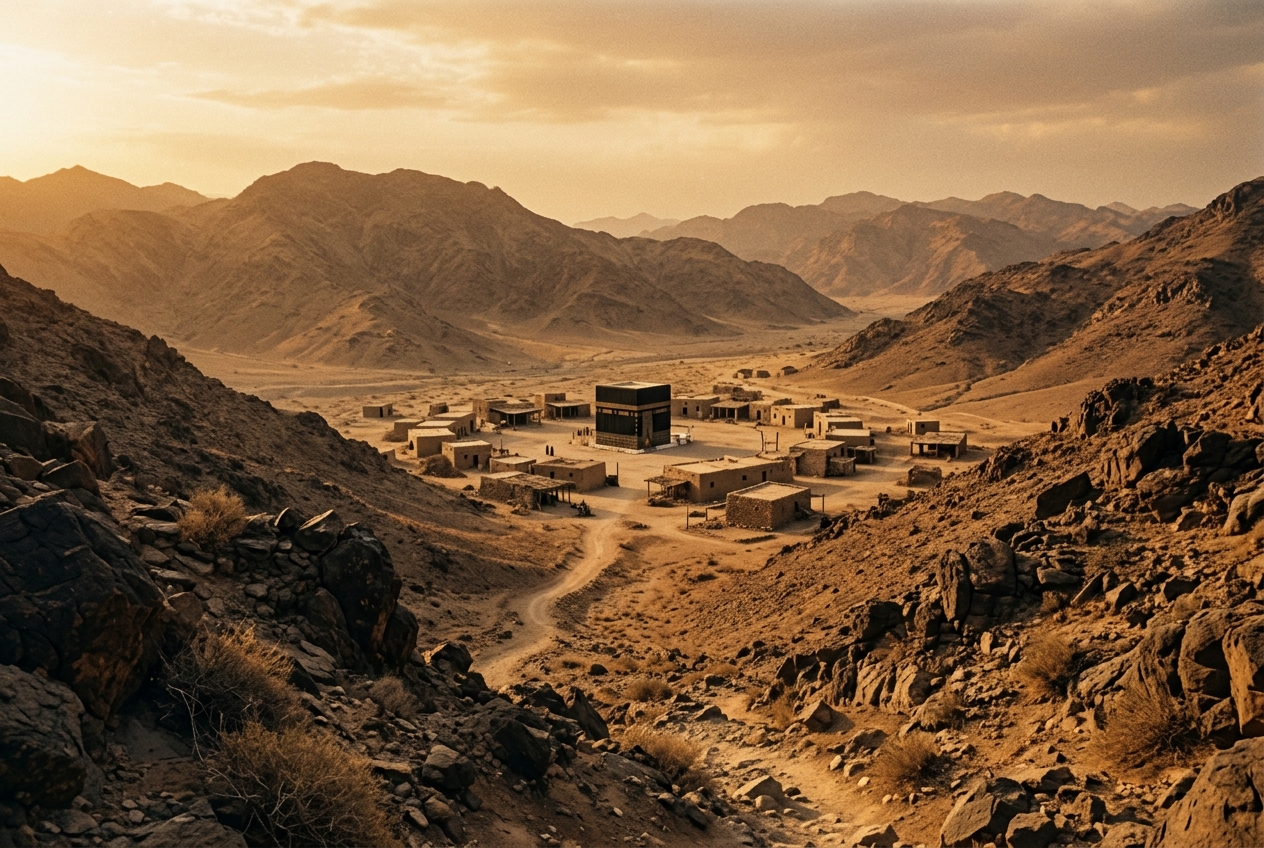
Reports differ on the exact circumstances, but it is well established that Umar accepted Islam in the sixth year of the mission. His declaration allowed the Muslims to pray openly at the Kaaba for the first time.
With the Prophet ﷺ
He migrated to Madinah and stood at Badr, Uhud, the Trench, Hudaybiyyah and the Conquest. His counsel was so often confirmed by revelation that the Prophet ﷺ said there were 'inspired men' before, and if any were in this Ummah it was Umar.
Justice & Administration
As Caliph he founded the diwan registers and the public treasury (Bayt al-Mal), organised the judiciary, established the Hijri calendar, and toured to inspect the welfare of the people, holding governors to account.
Jerusalem & Expansion
In his time Islam reached Jerusalem, Persia and Egypt. Entering Jerusalem humbly, he guaranteed the safety of its people and their places of worship in a written covenant.
Assassination & Legacy
He was stabbed while leading the dawn prayer in 644 CE and died soon after, buried beside the Prophet ﷺ and Abu Bakr. He left a model of a ruler answerable to God and to the least of his people.
Authentic Narrations
والذي نفسي بيده، ما لقيك الشيطان سالكًا فجًّا قطّ إلا سلك فجًّا غير فجّك.
“By Him in whose Hand is my soul, Satan never meets you on a road but he takes a road other than yours.”
Sahih al-Bukhari; Sahih Muslim
ورد أن النبي ﷺ سمّى عشرة من أصحابه من أهل الجنة: أبو بكر، وعمر، وعثمان، وعليّ، وطلحة، والزبير، وعبد الرحمن بن عوف، وسعد بن أبي وقاص، وسعيد بن زيد، وأبو عبيدة بن الجراح.
“It is reported that the Prophet ﷺ named ten of his companions as people of Paradise: Abu Bakr, Umar, Uthman, Ali, Talha, al-Zubayr, Abd al-Rahman ibn Awf, Sa'd ibn Abi Waqqas, Sa'id ibn Zayd, and Abu Ubaidah ibn al-Jarrah.”
Jami' al-Tirmidhi (Sahih)
Historical Sources
- ✦Sahih al-Bukhari; Sahih Muslim
- ✦al-Tabari, Tarikh al-Rusul wa al-Muluk
- ✦Ibn Sa'd, al-Tabaqat al-Kubra